
Part I – Foundations
Chapter I
Before The Hospital
Pages 25–31
Before The Hospital
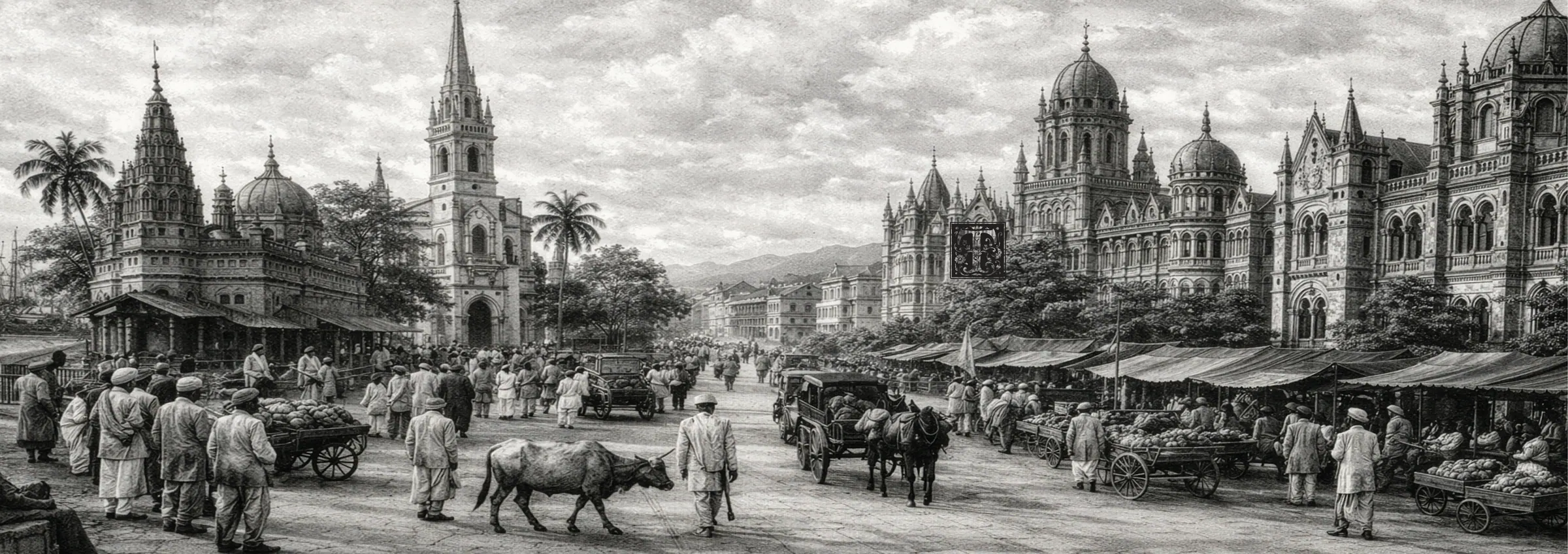
The Rajabai Clock Tower was not yet built. Nor the Bombay Municipal Corporation building, nor the Bombay High Court, not even Victoria Terminus. There were no trains, no trams.

Before reclamations stitched the islands together, the sea pressed close on every side. Tides crept into creeks and low ground, leaving behind stretches of marsh between neighbourhoods. Beyond the Fort walls lay the Esplanade, a wind-beaten expanse of sand and scrub. Past it began the crowded ‘native’ town, its lanes narrowing as the land rose and fell.
Here, at sunrise, sweepers cleared night soil into carts that trundled towards the edge of the island city; workers hauled cotton bales from godowns to the docks; dock coolies shouted over the groan of pulleys and masts; bullock carts jammed the roads, laden with grain, timber and stone—all this long before the sun was high.
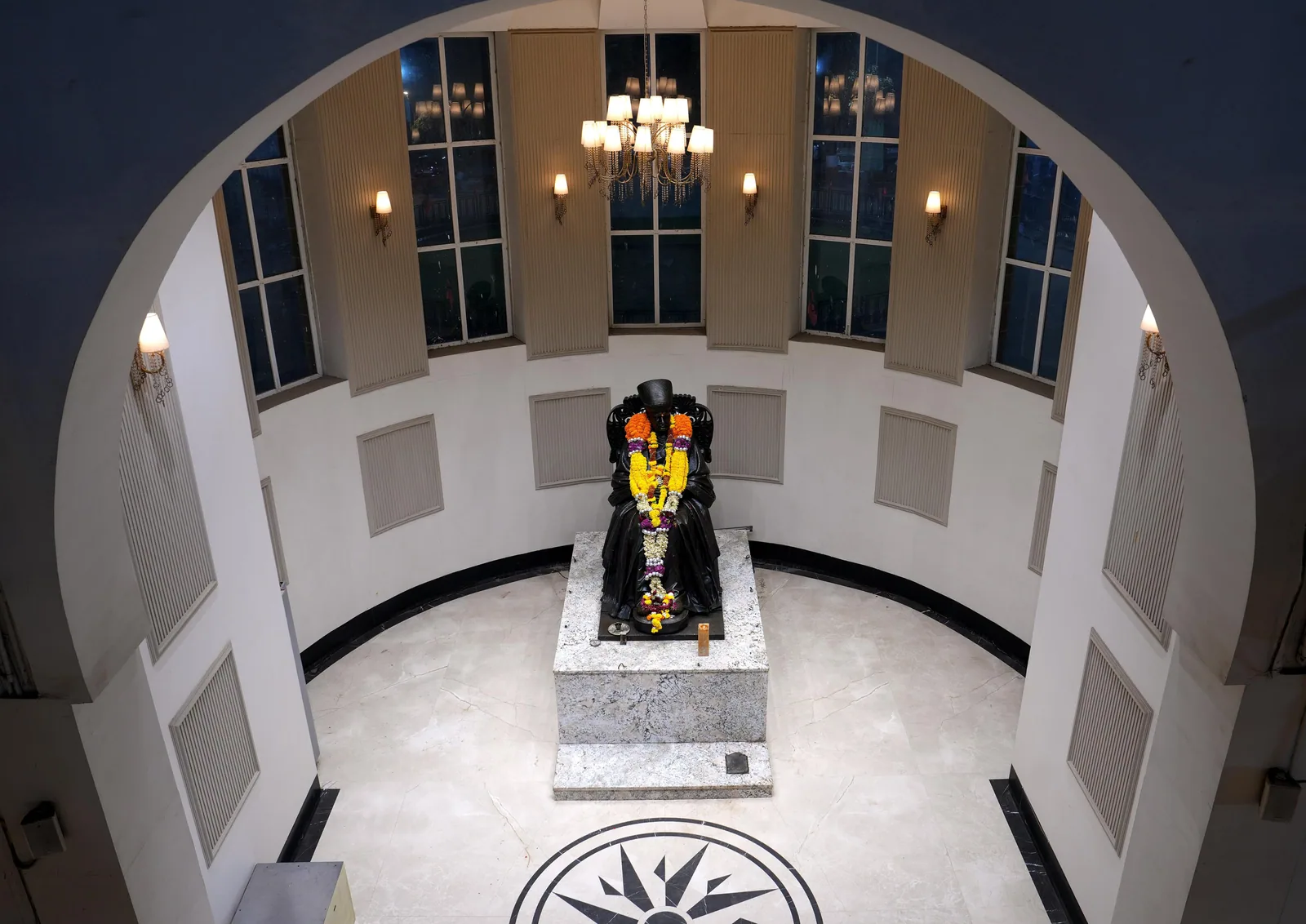
If it feels as though there were two cities, one where the fashionable gathered for tea and cakes and another where disease and death lurked in alleyways, it is because there were indeed two.
In densely populated, chawl-like buildings, the number of residents grew faster than the city’s streets or drains could accommodate. In the low-lying neighbourhoods of Nagpada, Byculla, Tardeo and Girgaum, the subsoil in courtyards was perpetually damp; water collected easily and lingered. After every shower, the ground stayed sodden for days, the soil too saturated to absorb any more. Pools formed between buildings, and when they receded they left behind banks of silt and sewage. In some quarters, the roads themselves lay under shallow water.
It was in this Bombay that, in the summer of 1845, the Sir Jamsetjee Jeejeebhoy Hospital opened its doors.
Beds were occupied almost immediately. Within months, convalescents were sent home to make room for the dangerously ill. Those who remained lay stricken with cholera and mysterious fevers, wasting cachexia, small-pox, ulcers and festering wounds. Many were admitted with injuries—skulls split or jaws fractured by clubs and stones in scuffles, bodies crushed under cart wheels, labourers’ bones broken by falls.
Between 1848 and 1849 alone, the hospital performed eighteen major surgeries: leg and thigh amputations, arm amputations, lithotomies, operations for strangulated inguinal hernias, even the removal of a jaw, besides numerous smaller procedures to remove fingers, toes and tumours.
Outside the hospital, mortality was highest where drainage was terrible and rooms most crowded. The poorest districts bore the heaviest losses; government death registers from the 1800s map the city’s inequalities with stark precision.
In contrast, writing in 1852, British civil servant James Gray described Bombay scenes of idle enjoyment, with horse-drawn carriages and evening drives on the Esplanade, where aristocrats and a small circle of Indians listened to the garrison band while enjoying the sea breeze, or admired the bungalows near the ‘Breach’, not far from the ‘Hindoo temple of Mahaluxmee’.
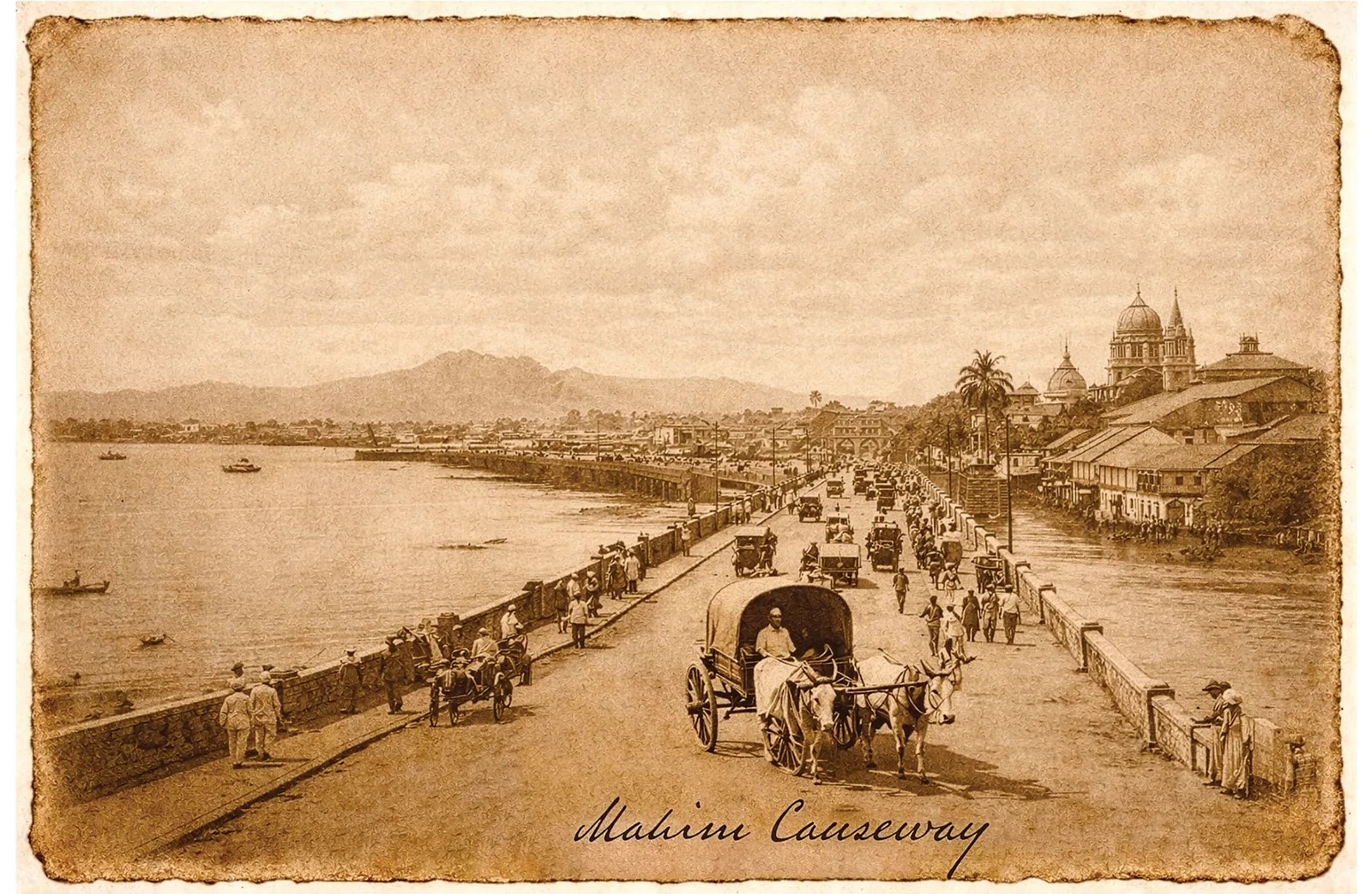
Another evening drive for the well-heeled led to Lovegrove, in present-day Worli, where the Brihanmumbai Municipal Corporation now operates a major floodwater pumping station. Beyond Lovegrove stretched a scenic route through dense woods of coconut and date trees, leading to Mahim. Further north lay the island of ‘Bandora’, with churches and chapels constructed by the Portuguese, accessible via what was then a new causeway. Gray was referring to the Mahim Causeway, completed in 1846, also through a generous grant from Sir Jamsetjee Jeejeebhoy, with a plaque naming the bridge after his wife, Avabai.
If it feels as though there were two cities, one where the fashionable gathered for tea and cakes and another where disease and death lurked in alleyways, it is because there were indeed two.
The Fort walls were still intact; the ‘natives’ remained outside. In one city, wealthy residents escaped to Mahabaleshwar to spend the summers in more agreeable weather. In the other, families lived and worked in the same airless spaces; the sick were cared for at home until weakness forced them to seek help. By the time many reached care, disease had already run its course. Death was recorded section by section in municipal tables.
Official reports from the subsequent decades offered a stark inventory of these conditions. One health officer described damp grain stored in Mandvi godowns that were wet at the end of September, their woodwork mildewed. Housing suffered from poor ventilation; passages between buildings were so narrow they barely admitted light and an adult man struggled to walk through them. Sewage ran openly along some public roads. Reports described some localities as “perpetual fever nests.”
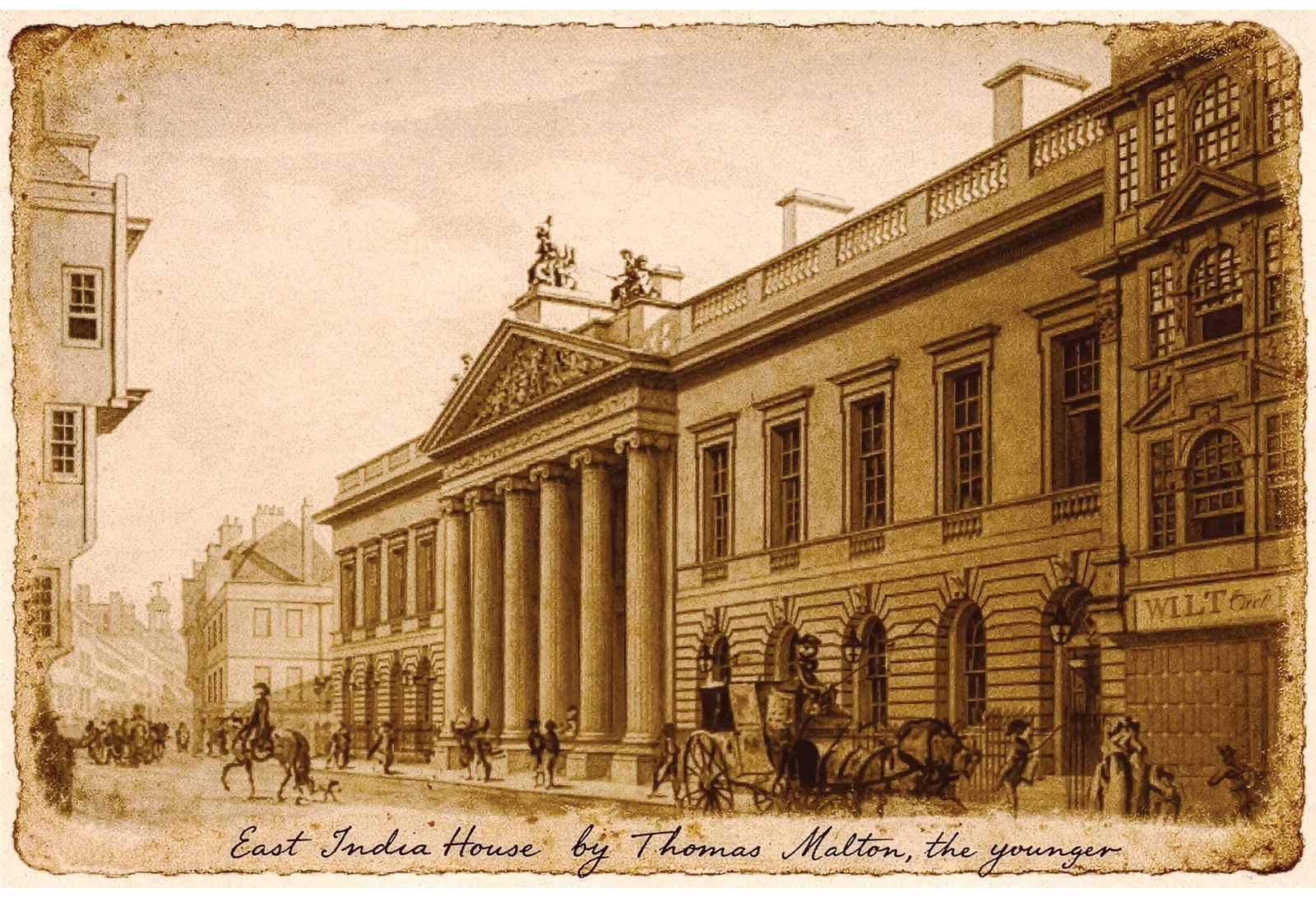
Bombay was a port of commerce and opportunity, but it was also a place where climate, congestion and poverty made disease a constant companion. The need for organised care was no longer abstract; it was visible in every ward, every street.
When the doors of Sir JJ Hospital and Grant Medical College finally opened, the city was already waiting to fill its beds. Though funded by philanthropy, the hospital was not an act of benevolence.
It was the city’s necessity.